

Your wedding timeline can make or break your big day. And while Pinterest is full of “sample schedules,” many skip over the chaos, cushions, and curveballs. Here’s how to create a timeline that actually works.
How to Build Your Timeline
Work backward from the ceremony - Set key anchor points and build around them.
Talk to your vendors – Ask when they need to arrive, set up, or begin.
Add padding – Add 15–30 minute cushions between each major event.
Consider lighting – Golden hour photos? After-dark fireworks? Know your daylight.
Pro Tip: Always overestimate how long things take. And build in 10-15 minutes of breathing space every few hours.
Why is a timeline crucial?
1. Keeps Everyone on the Same Page
From vendors to family members, a clear timeline ensures everyone knows where to be and when. No guesswork. No chaos. Just smooth transitions throughout the day.
2. Reduces Stress and Surprises
A timeline builds in buffer zones for hair/makeup delays, traffic, or unexpected hiccups. Knowing what’s next helps you stay calm and enjoy the moment, even if things run a bit behind.
3. Maximizes Time for What Matters
Your wedding day flies by. A well-planned schedule ensures you make time for things that matter most—private moments with your partner, golden hour photos, or a dance with your grandmother.
4. Helps Vendors Do Their Best Work
Photographers need to know when portraits happen. DJs need a cue for the first dance. Caterers need a heads-up for dinner service. A timeline allows your team to coordinate effortlessly behind the scenes.
5. Gives Guests a Great Experience
Guests appreciate a flow that makes sense—no long gaps, no confusion. A timeline helps create a seamless, enjoyable event from ceremony to send-off.
Sample Timeline
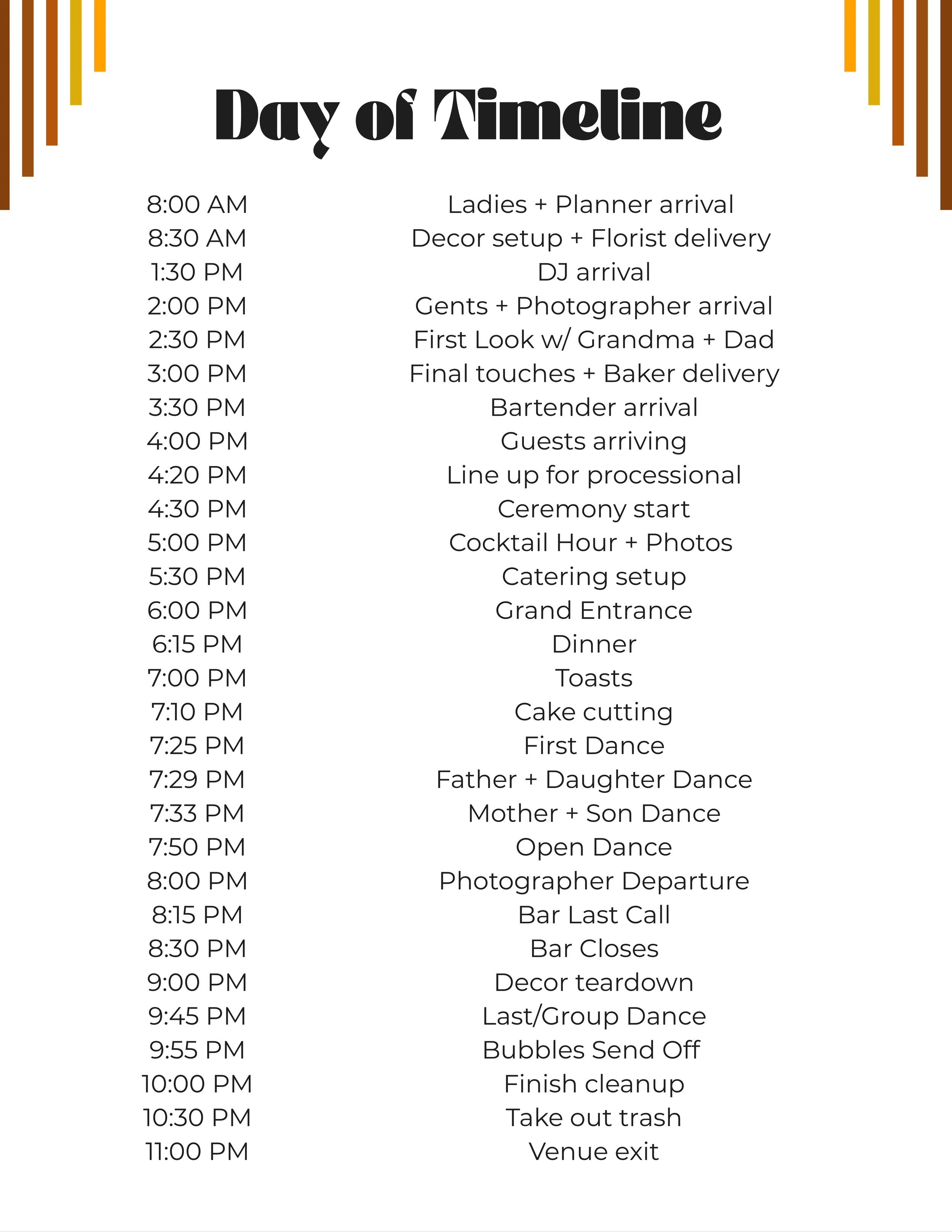
A smooth timeline = a stress free day. Plan for joy, chaos, and everything in between. A clear schedule helps your team do their best work and gives you the freedom to be fully present.